
Navigation link 1
Navigation link 2
Navigation link 3
Navigation link 1
Navigation link 2
Navigation link 3
Navigation link 1
Navigation link 2
Navigation link 3
Navigation link 1
Navigation link 2
Navigation link 3
Food for Thought
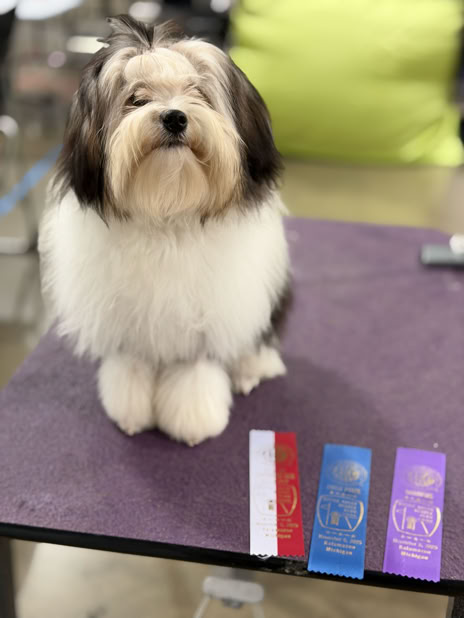
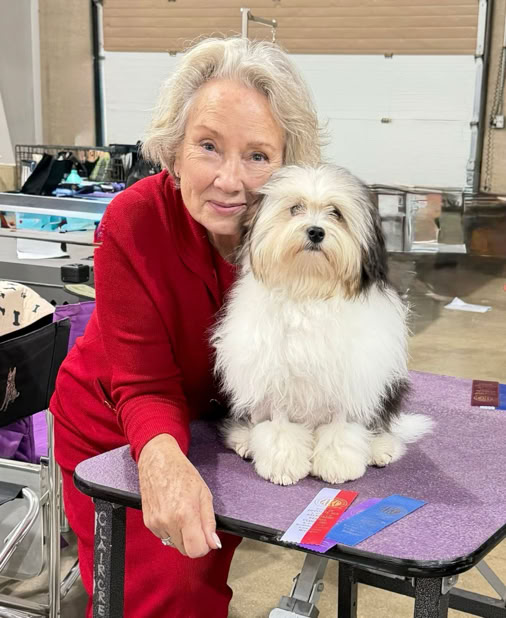
Donna Gottdenker and Cachet
The recent publicity regarding the rising costs of using a corporate vet is a concern for all of us, and with this publicity comes the concern of the rise in cost of veterinary care. Therefore it is even more important for the public to understand the importance of well bred purebred dogs and the reason behind the purchase price of our puppies.
It is important to know the value the purchaser is getting as opposed to the initial price of a rescue dog.
Responsible breeders health test all their breeding stock to the recommendation of their breed club, which has high standards. Beyond that they are tracking conditions that do not have tests. Conditions that pop up with their own dogs and the dogs of other breeders. This allows the breeder to make informed decisions on who to use and who to remove from their breeding program in order to provide the healthiest possible litters to people for pets.
The experience of the breeder is also a source of knowledge for the buyers, who can work collaboratively with their vet teams based on past experience. A call to the breeder can reduce the number of unnecessary costly vet visits. The goal of producing healthy dogs is always first in mind for a good breeder.
A good breeder will include temperament as a very important factor in their breeding program. The goal is to produce stable, friendly, easy to live with pets, true to their breed history as well as properly screening potential buyers to ensure they are an appropriate match that will save not only heartbreak but the cost of relying on behaviourists to help alter problematic behaviour. Many rescue pets are sent to the vet or to costly behaviourists because of temperament issues that are bred into the dog or caused by lack of knowledge imparted to the new owner.
Breeders are also responsible in many cases for financially supporting continued health research toward eliminating conditions in their breed. Specific breed health foundations exist thanks to the membership of responsible purebred dog enthusiasts, primarily breeders. From a wider perspective this contributes to improved health and therefore less money spent at the vet office.
Ultimately, while upfront costs of purchasing a well bred dog can be higher than a rescue or a BYB puppy, the savings over the lifetime of that dog and the support of a good breeder can be significant.
Donna Gottdenker Clairecreek Pwds
This is something everyone should see.
This xray is of a 2 week old puppy.
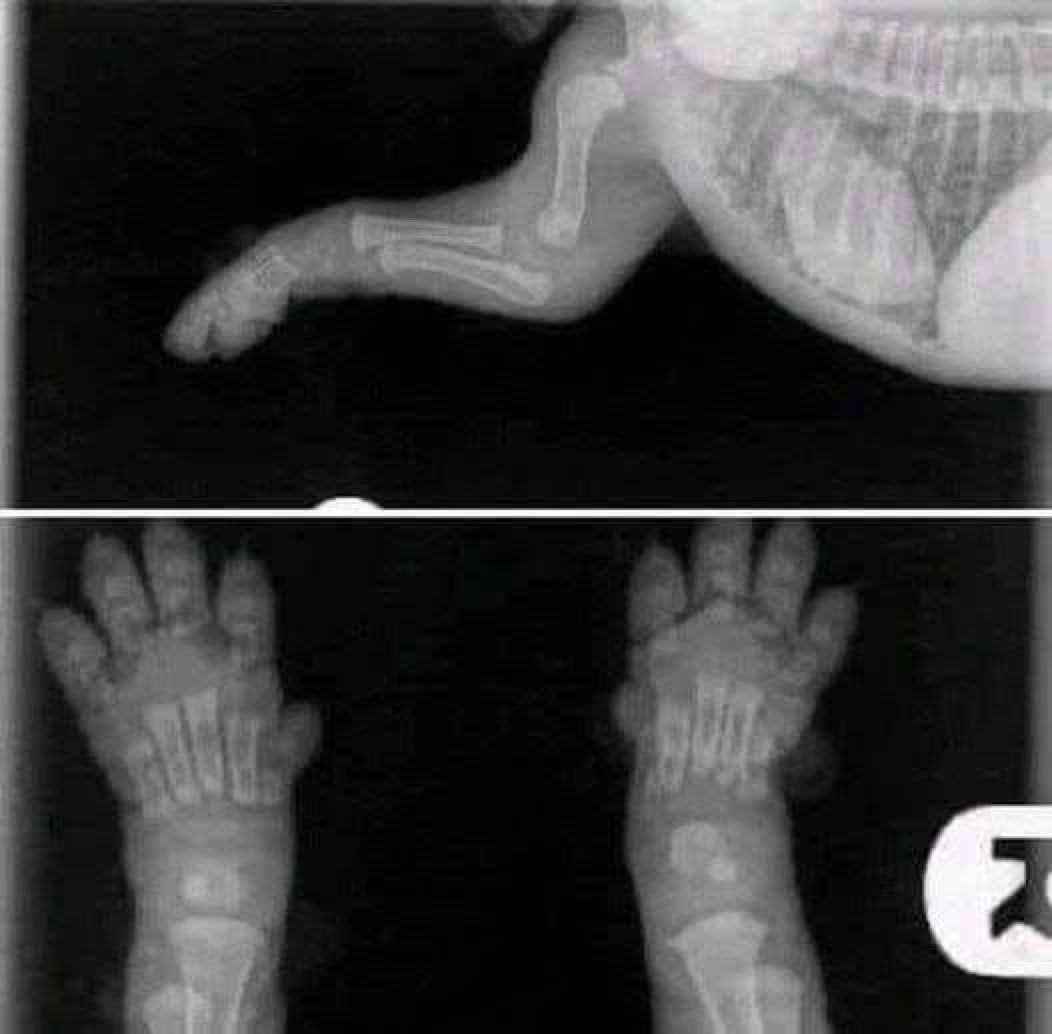
When you get your 8/10 week old puppies, please keep this image in mind. Their bones do not even touch yet. They plod around so cutely with big floppy paws and wobbly movement because their joints are entirely made up of muscle, tendons, ligaments with skin covering. Nothing is fitting tightly together or has a true socket yet.
When you run them excessively or don't restrict their exercise to stop them from overdoing it during this period you don't give them a chance to grow properly. Every big jump or excited bouncing run causes impacts between the bones. In reasonable amounts this is not problematic and is the normal wear and tear that every animal will engage in.
But when you're letting puppy jump up and down off the lounge or bed, take them for long walks/hikes, you are damaging that forming joint. When you let the puppy scramble on tile with no traction you are damaging the joint.
You only get the chance to grow them once. A well built body is something that comes from excellent breeding and a great upbringing-BOTH, not just one.
Once grown - around 12-18 months depending on their breed, you will have the rest of their life to spend playing and engaging in higher impact exercise. So keep it calm while they're still little baby puppies and give the gift that can only be given once.
David Attenborough
Choosing Between a Havanese and a Löwchen
A clear, practical guide for puppy buyers
Breed Purpose & Personality
**Havanese**
Bred primarily as a companion and lapdog. They are very people-oriented, affectionate, and thrive on close interaction with their families. Havanese enjoy being involved in daily life and form strong bonds with their owners, often preferring to be nearby rather than alone.
**Löwchen (Little Lion Dog)**
An ancient European companion breed developed to be adaptable, alert, and sturdy. Löwchen are cheerful, confident, and loyal, with a bit more independence and self-assurance.
Size & Structure
- Havanese: 7–13 lb, slightly longer than tall, lighter bone
- Löwchen: 13–18 lb, square and well-balanced, more substance
Löwchen often feel like a “big dog in a small body,” while Havanese are more delicate overall.
Coat & Grooming
**Havanese**
- Soft, silky, lightweight coat
- Usually kept long and natural
- Requires frequent brushing to avoid matting
**Löwchen**
- Long coat with more texture and durability
- Traditionally shown in the lion trim
- Grooming is structured but coat is less fragile
Energy & Lifestyle Fit
**Havanese**
- Moderate energy
- Thrives in busy households
- Excellent for apartments and constant companionship
**Löwchen**
- Moderate to moderately active
- Enjoys walks, play, and activities
- Adapts well to both quiet and active homes
Training & Independence
- Havanese: Very eager to please and responsive to gentle, positive training.
- Löwchen: Intelligent and confident learners who enjoy structure and engagement.
Health Considerations (Responsible Breeding)
Common screenings for both breeds may include:
- Eye examinations (OFA/CAER)
- Patella evaluations
- Cardiac screening
Breed notes:
- Havanese: Patellas, eyes, and some autoimmune concerns.
- Löwchen: Generally robust; eye screening and inherited condition monitoring recommended.
Typical Puppy Buyer Contract Elements
- Health guarantee (often 1–2 years)
- Spay/neuter or non-breeding agreement
- Return-to-breeder clause
- Care, grooming, and veterinary expectations
Löwchen breeders often emphasize lifetime responsibility and mentorship due to the breed’s rarity.
Rarity & Breeder Support
- Havanese: More common; broader breeder availability
- Löwchen: Rare breed; breeders typically offer lifelong support
Which Breed Is Right for You?
Choose a Havanese if you want a very people-focused, affectionate companion.
Choose a Löwchen if you want a confident, joyful dog with resilience and adaptability.
---
Let's Talk About Boys... the Four-Legged Kind! 🐶
So, the age-old question popped up again recently — "Do you have any girl puppies?" And I get it! For some animals, the sex does make a difference. But when it comes to our delightful little Löwchen, let me tell you — the boys are absolutely dreamy.
Over the years as a breeder, I've had both boys and girls. But here's the fun twist: my mama dogs seem to have a secret club where they've all agreed to deliver more boys than girls. Maybe they're trying to tell us something? Like, "Hey human, trust me — these boys are extra special!"
And you know what? They're right. The boys are total lovebugs. Loyal, snuggly, and sweet as pie. I can't count the number of people who started out saying, "I only want a girl," and ended up head-over-heels in love with a boy. It's like they come with built-in charm (and maybe a sprinkle of magic).
Honestly, I think the "only girls, please" mindset is a bit of leftover thinking from the days when unneutered boys were off serenading the neighbourhood and redecorating the shrubs. These days, with responsible ownership, our boys are total gentlemen.
So don't be afraid to fall for a little “fella” — He just might be the best decision you didn't know you needed. 💕
This was a question posed to owners of male Löwchen and the answers were overwhelming positive for the male gender. Don’t overlook a lovely little boy.